Experimental validation confirmed that 9 sequences out of 22 (40% hit rate) exhibited activity against at least one of the five substrates tested, demonstrating our approach’s ability to identify functional biocatalysts.
Pharmaceutical
Identifying a high-performing KRED for API synthesis
The challenge
For both generics and pharmaceutical companies, speed to market is a critical driver of commercial success. While biocatalysis offers a superior path to synthesizing complex chiral APIs, the traditional enzyme discovery process —reliant on extensive, resource-intensive high-throughput screening (HTS)— creates a significant bottleneck. This time barrier often prevents the adoption of optimal enzymatic solutions.
Faced with this challenge, researchers from Boehringer Ingelheim, Christian-Albrechts University of Kiel, Gecco Biotech and Zymvol sought a faster, more efficient path to identify a specific ketoreductase (KRED) for a key pharmaceutical building block.
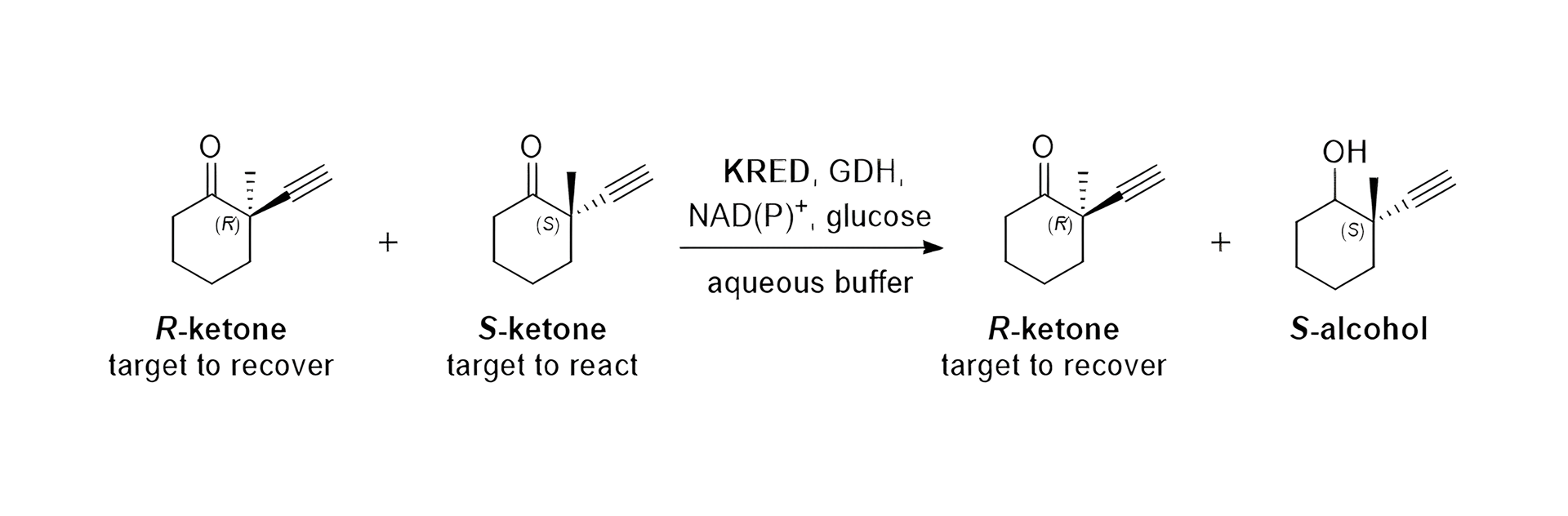
Target kinetic resolution reaction.
Our solution
Instead of embarking on an experimental campaign, the consortium partnered with Zymvol to leverage its BioMatchMaker® platform. The goal was to bypass discovery bottlenecks and deliver a small set of high-potential enzymes ready for immediate validation.
Zymvol’s in silico process involved:
- Massive-scale screening: We computationally analyzed a sequence space of over 450,000 publicly available ketoreductases.
- Intelligent down-selection: Using a multi-step filtering and molecular docking simulation process, BioMatchMaker® identified the key structural and energetic features required for the reaction.
- Rapid targeted recommendation: In less than a month, we narrowed the pool down to just 16 top-tier candidates, precision-selected for their high probability of success, saving our partners months of lab work.
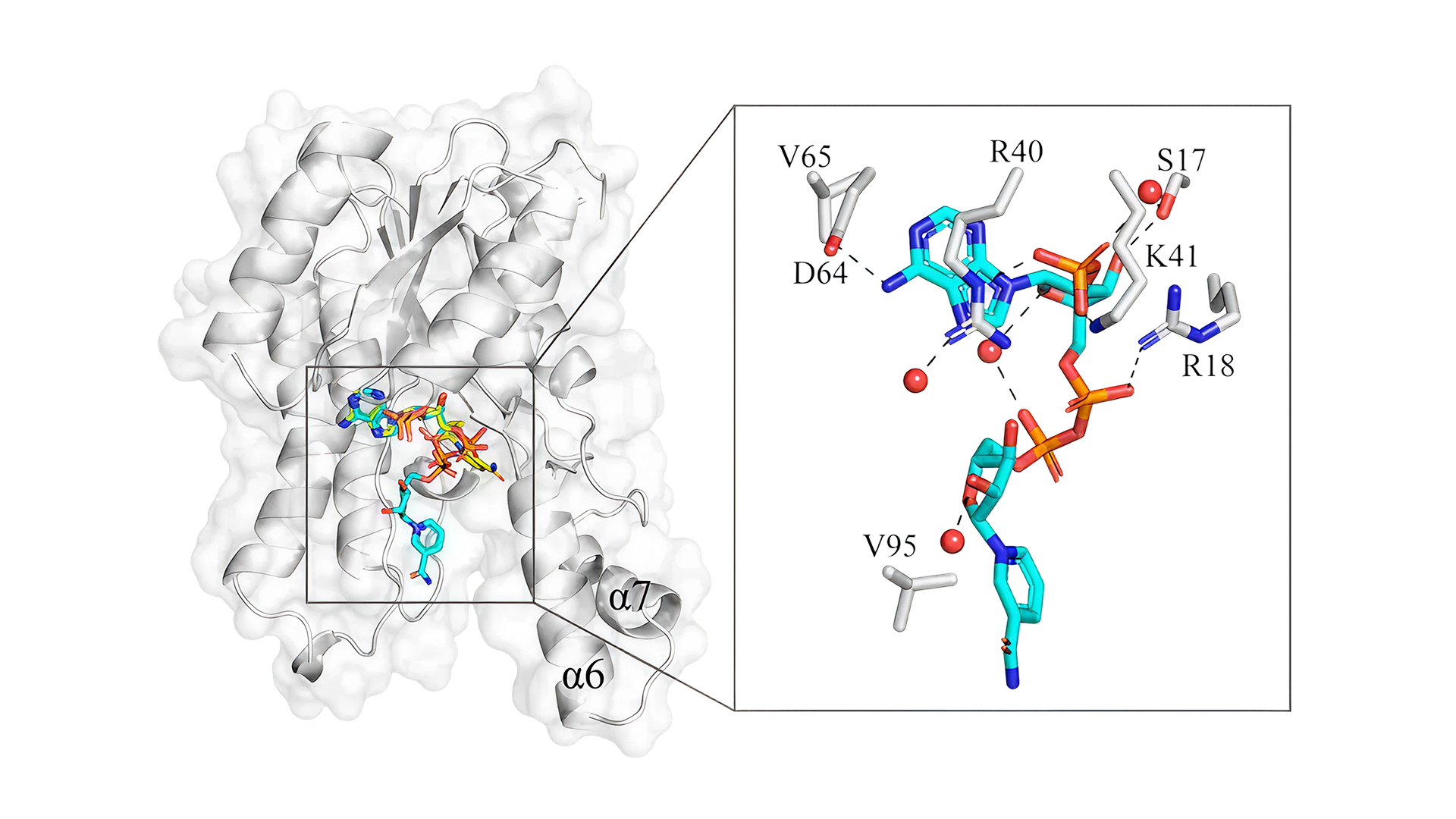
The chain A of Tcalid SDR showing two observed conformations of NADP with a zoomed in view of the encounter complex.
Results & impact
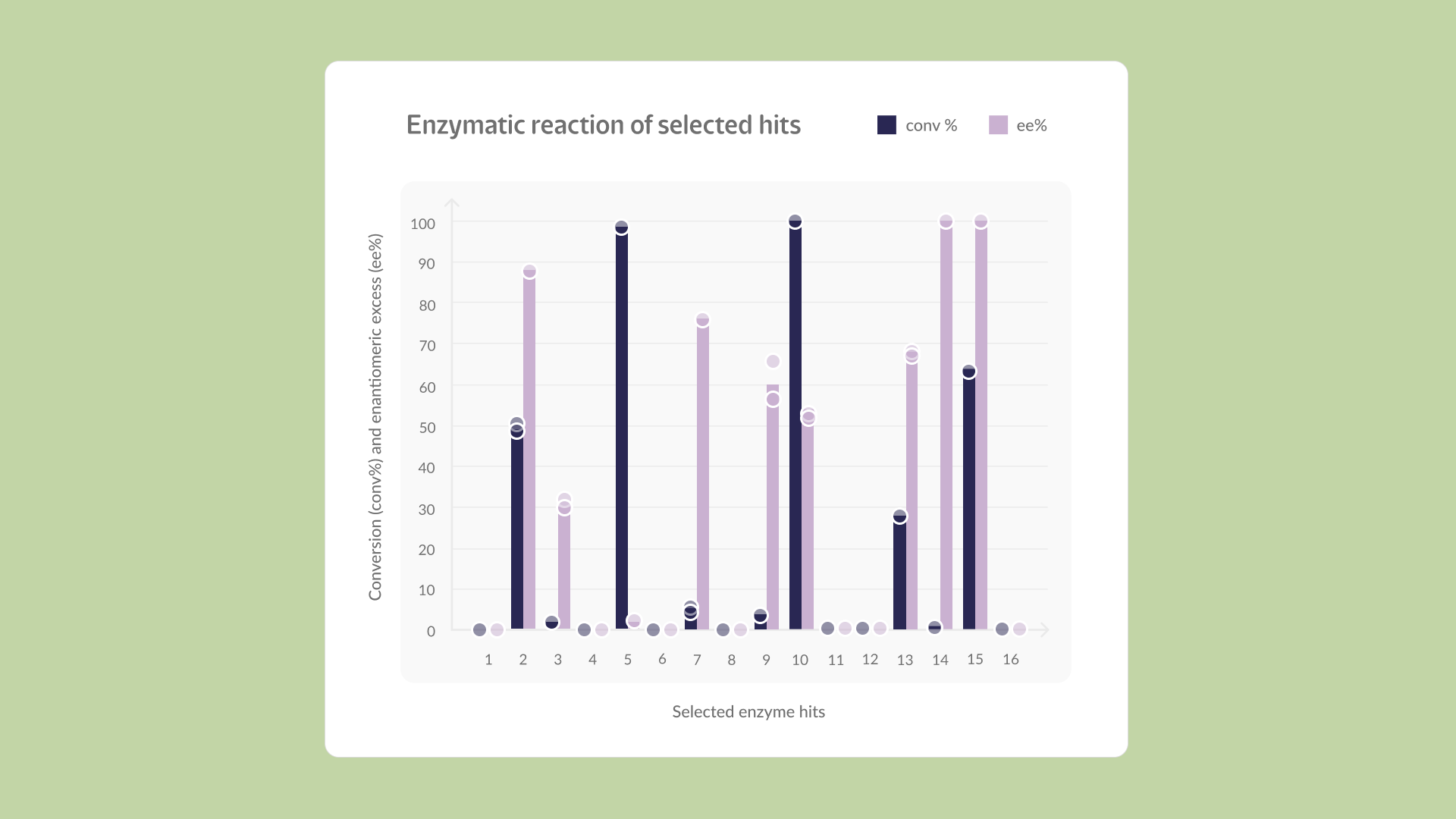
Conversion and ee% of selected enzyme hits.
The top-performing enzyme, Tcalid SDR (Enzyme 15), delivered an outstanding combination of activity and e.e.
- Predictive accuracy & de-risking
Experimental testing of the 16 recommended enzymes confirmed that 8 were active hits. This 50% hit rate is a testament to the predictive power of BioMatchMaker®, de-risking the entire discovery phase and ensuring that valuable lab resources are focused exclusively on viable candidates. - Ready for process development
The top-performing enzyme, Tcalid SDR (Enzyme 15 – See research paper), delivered an outstanding combination of activity and precision. In a brief 30-minute reaction, it achieved a 63% conversion to the desired chiral alcohol and 100% enantiomeric excess (e.e.), meeting the stringent purity requirements for pharmaceutical ingredients. This result provides a potent, high-quality starting point for direct advancement into process optimization and scale-up.
Performance Highlights50%
Hit rate
From 16 computationally-selected candidates, half were confirmed as active enzymes, drastically reducing lab validation costs and effort.
63%
Conversion
Within a 30-min reaction, the top-performing enzyme showcased its effectiveness in turning the starting material into the desired product.
100%
Enantiomeric excess
Within a 30-min reaction, the top-performing enzyme delivered perfect stereoselectivity by producing only the single, desired stereoisomer.
|
 This Success Story summarizes the results presented in a peer-reviewed research paper. In collaboration with:   |
You might be interested in
Breaking IP barriers in API production
The enzyme engineering campaign yielded a lead candidate that significantly surpassed existing benchmarks. Experimental validation confirmed that Zymvol’s top hit delivered 10x higher activity than the leading patented enzyme, as well as 99% e.e.

From 1.5 billion sequences to high-performing enzymes in 2 months
The entire discovery-to-validation cycle was completed in a fraction of the time required for traditional approaches, dramatically de-risking the R&D process, lowering costs, and accelerating the timeline for bringing new products to market.